Matrix Platform v0.3.0: Unified integration, sampling and model stability
The release introduces a new unified integration layer, a sampling mechanism and a suite of stability metrics.
Tip
To check out this release, run git checkout v0.3.0.
Key Enhancements
Unified integration layer and Spoke integration
So far, the process of integrating datasets has been ad-hoc, in the sense that we need to add additional pipeline steps for each source. Over time, we've learned that this process is fairly structured, i.e.,
- Transform the nodes into our unified format
- Transform the edges into our unified format
- Normalize nodes identifiers (CURIEs) to ensure the same identifier universe is used
We've implemented this streamlined process across all of our sources, hugely simplifying the integration of new sources. Moreover, we've setup the integration for Spoke, a new knowledge graph that we aim to use in the future.
Sample pipeline
The matrix pipeline integrates a wide variety of data sources, and trains complex machine models on top. Over time, the pipeline grew tremendously, rendering end-to-end runs on real data intractable for development purposes. To speed this up, we had implemented runs on synthetic data. This technique has proven quite relevant during the initial stage of introducing new features, but it failed to surface issues related to the data quality of our sources.
To bridge this gap, we've introduced the ability to run the pipeline on a sample of data, giving more confidence that the pipeline will run end-to-end in a timely manner. The sample pipeline samples the integrated knowledge graph, therefore this feature is available to the embeddings pipeline and on.

K-fold cross-validation and stability metrics
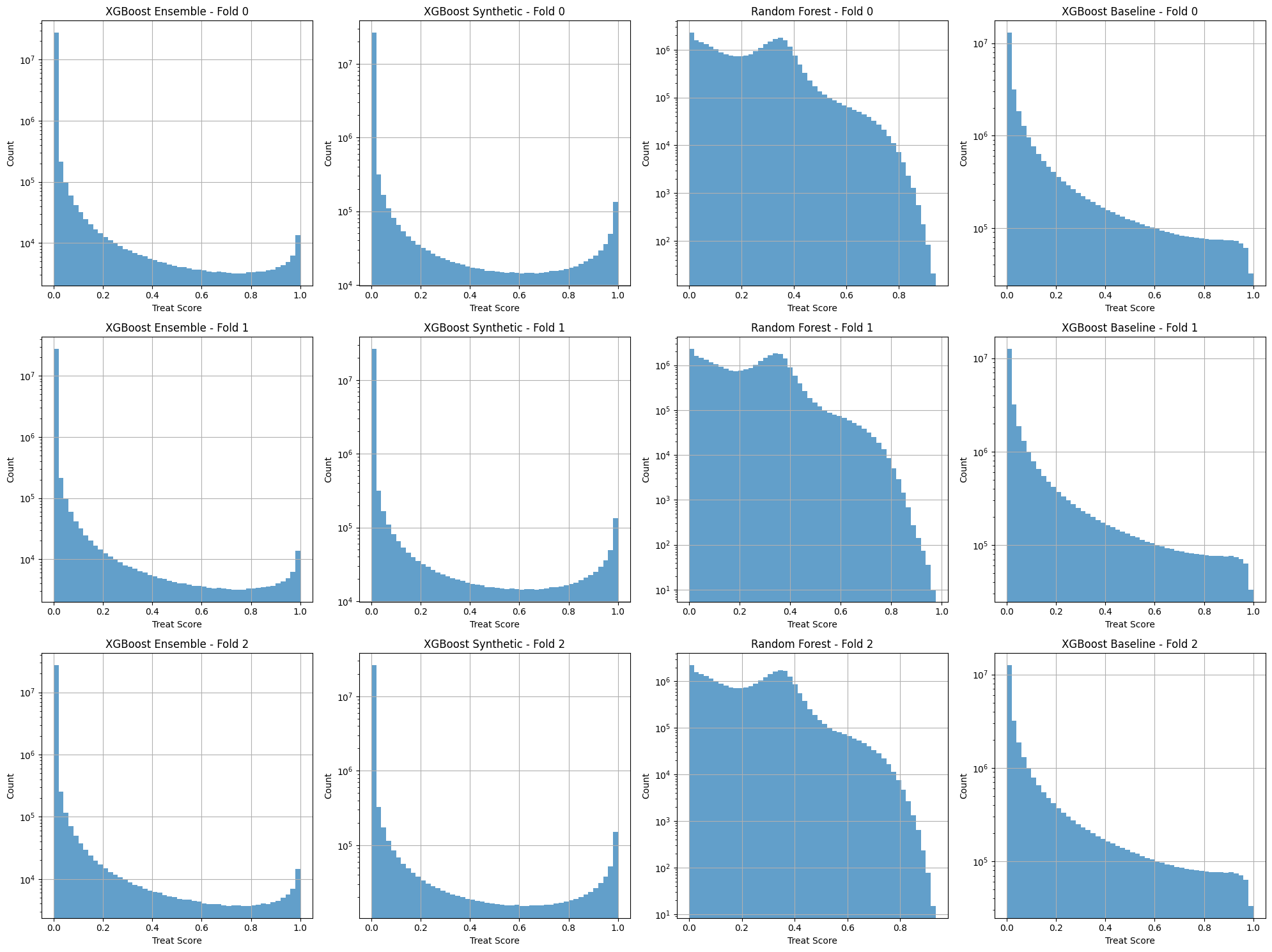
So far, our pipeline is producing a single model on the entire data. Though, it was still possible that we got lucky with our choice of seed, thereby getting a good model by coincidence. Good modes are stable, meaning that changes in subsets of data and seeds yield models with similar performance. We've updated our pipeline to train multiple models, on different subsets of data, allowing us to assess model stability.
We've also extended our pipeline evaluation suite to produce model stability metrics. The screenshot below shows a distribution of treat scores for the matrix across the folds.
Deploy Grafana and Prometheus for improved cluster observability
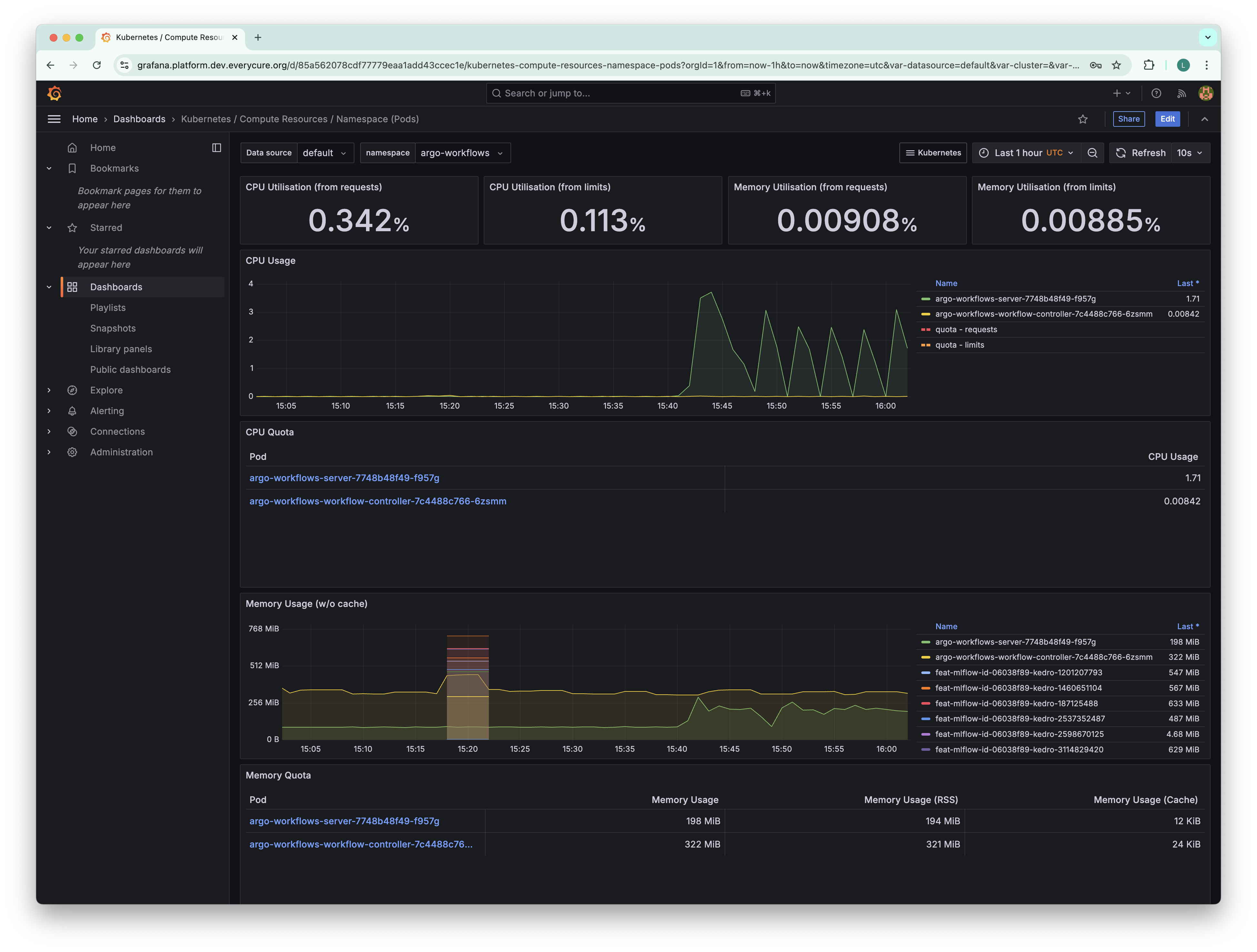
Workloads running on Kubernetes might fail due to them hitting resource limits. GCP provides some observability insights, but remains quite limited. We've therefore installed Grafana and Prometheus on the cluster.
Improved data tracking
Releases page
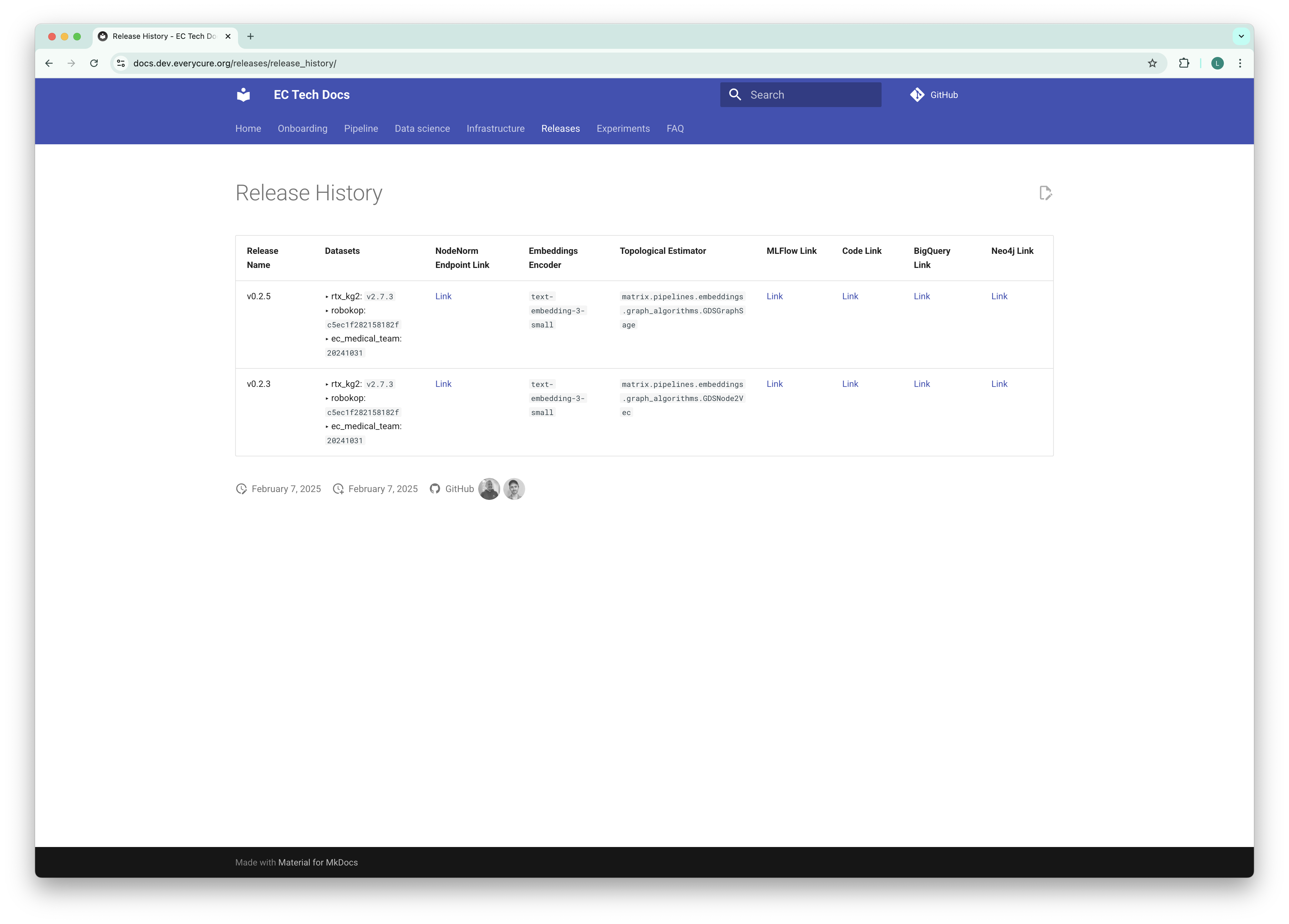
We can split our Matrix pipeline in two major stages, i.e., the process that produces a data release, i.e., an integrated knowledge graph, and the stage that trains the model. For each data release, we're now keeping track of data versions on our micro site.
We will continue to expand this page to include more information about the data releases. We are also looking for a more standardized approach to publish (internal) datasets in the form of a dataset catalog, especially as we start building multiple features based on the KG which will become distinct datasets that can be consumed
MLFlow
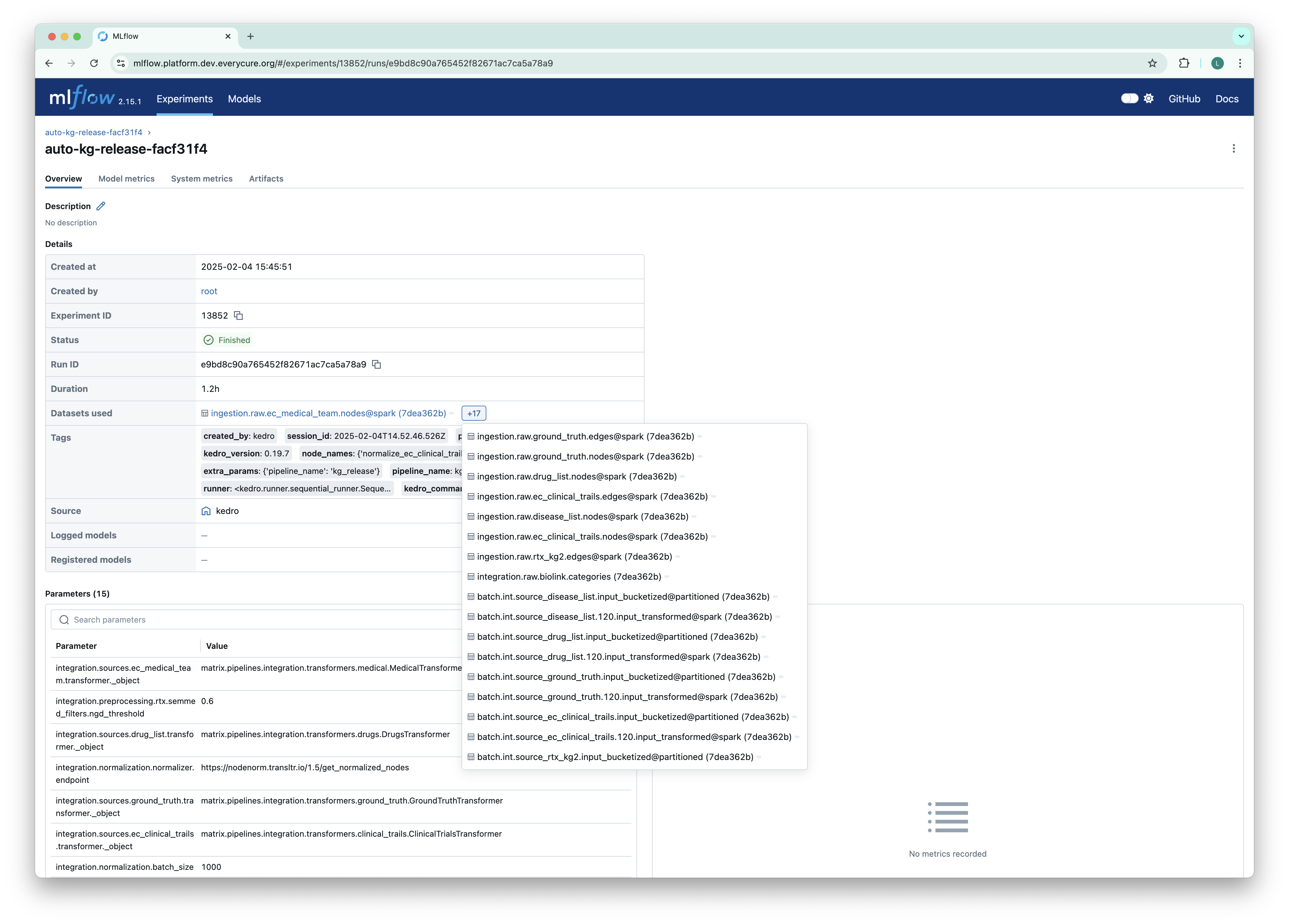
MLflow now logs the datasets used within the pipeline. This significantly improves the traceability of experiments by recording the exact data versions used for each run. This feature enhances reproducibility and provides valuable context for analyzing experiment results. (PR #1048)
Bug Fixes
Several critical bugs were addressed in this release, improving the stability and reliability of the platform:
- Clinical Trial Preprocessing: Fixed an issue in the clinical trial preprocessing nodes, ensuring the correct handling and preparation of clinical trial data for downstream analysis. (PR #1039)
- Data Normalization Status: Corrected the normalizer to accurately reflect the
normalization_successstatus, providing more reliable feedback on the data normalization process. (PR #1060) - MLflow Metric Tracking: Fixed an issue affecting MLflow metric tracking, ensuring accurate recording and reporting of experiment metrics. (PR #1075)
Technical Enhancements
This release includes several technical enhancements that improve efficiency, robustness, and maintainability:
-
Added GitHubReleaseCSVDataset to streamline ingestion of sources from GitHub releases into the pipeline. (PR #1050)
-
Added automation to orchestrate periodic data releases, ensuring a monthly data release (PR #877)
-
Simplify pipeline to produce single model per run, streamlining comparability across runs (PR #924)
-
Update pipeline to use Pandera for runtime data quality checks, removing dependency on private package (PR #938)